Weekend Opinion: The Edtech Backlash Continues
Why nobody trusts the tech business anymore
There’s a New York Times story this week on the ed tech backlash I’ve written about a few times: In Backlash Against Tech in Schools, Parents Are Winning Rollbacks (NY Times). The claim is that there’s a national backlash against technology in the classroom, with legislation now pending in around 20 states.
The parents’ successful campaign points to an escalating national reckoning for the powerful classroom technology industry. Encouraged by the fast spread of school cellphone bans, parents, teachers and legislators across the United States have banded together to ensure that technology use in schools is beneficial for learning.
Evanston has an advocacy group, Screen Sense Evanston. I am not an anti-technology person but I am a fan of their work and have signed their petition.
Let me tell a story about the tech business.
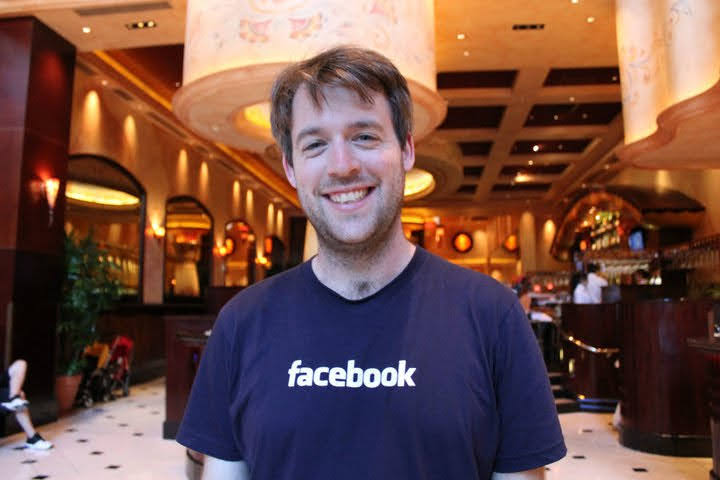
From 2010-12, I worked for facebook. Here’s proof: a picture of young me wearing the company uniform at the Palo Alto Cheesecake Factory.
I was a data scientist on the risk & payment team - our purview at the time was a product called facebook credits. This product was the financial backend for popular games like Farmville, Zynga Poker, and Angry Birds. If you bought a cow in Farmville, you were technically buying facebook credits and then given the in-game asset. If your kids play Roblox today, this was a proto version of their in game currency system, Robux.
It was my department’s job to review all the in-game purchases in order to detect and stop fraud. There were a lot of interesting schemes — fraudsters would steal credit cards, buy in-game assets, and then sell the accounts in Southeast Asia. Organized crime would use the game-mechanics to launder money. It was the digital wild west.
We were using early artificial intelligence and got skilled at stopping the majority of schemes and money laundering. But there was one category that we could never get under control: friendly fraud. Friendly fraud are transactions where the user spends money, but calls their bank and charges it back.
Common examples are:
User accidentally buys a digital good, can’t get a refund through normal channels, so they call the bank.
User buys a digital good, feels a sense of remorse and calls the bank saying they were “hacked” and requesting a refund. This is common in the adult content business.
User’s payment credentials get hacked in some other scheme and the bank just charges back everything, including innocent transactions.
Someone they know, usually a child or spouse, makes an unapproved purchase on their behalf.
Facebook didn’t make the games - we just made the platform. The biggest developer, was a company called Zynga, who made Farmville. At its peak, Farmville had something like 80 million monthly users. It was a massive source of revenue for facebook, who took a 30% cut of every transaction and passed along the fraud charges to the (unhappy) developers.
These games were very popular with adults — Farmville was, for better or worse, an early 2010s adult office worker phenomenon.
But over time, the adult market saturated and more users got smart phones. The developers started making games targeting kids — more cartoon-like imagery and mechanics. The developers also started adding what we now call dark patterns: aggressive and manipulative ways of asking for you to pay.

One more thing to add to the equation: around this time, facebook started using the global news feed (we called it the “megaphone”) to collect donations during natural disasters. The intent was to fund raise but there was a secondary benefit that a Director (now a prominent CEO) called “credential harvesting." Once you had a payment credential on file from a donation, it was available for use in games. It was a deliberate growth strategy.

So by 2011, it’s this perfect storm: parents are handing their kids the phone to distract them (for the first time), they have a credit card on file from donating to the Red Cross or buying something, developers are inventing dark patterns and children’s casinos, and facebook is rushing to maximize revenue before the 2012 IPO.
In my world, we started to see a ton of friendly fraud: parents demanding refunds for digital goods their kids purchased. In theory, you should refund the money as quickly as possible. But that’s not really what happened - facebook fought a lot of the refund requests, resulting in a lawsuit: Bohannon v Facebook. The Center for Investigative Journalism (CIJ) did great and accurate reporting on the lawsuit and detailed some wild stuff:
Minors spending large sums: A Facebook staff member noted that certain minor accounts spent $3.6 million in a three-month period starting October 12, 2010
Facebook denying a refund for $6,500 to parents of a 15-year-old.
Facebook being aware of minors under 13 and not disabling their accounts (or in some cases, refusing refunds)
Everything I’ve written in this story is also contained in that case, which settled in 2016, with facebook promising to make some changes and paying out some refunds. One of my emails is even in the case’s discovery, where I’m diplomatically (unsuccessfully) trying to convince a co-worker to stop fighting chargebacks.
I quit in October 2012, during the election — but that’s a story for another time.
What does this have to do with anything?
The point I’m trying to make here is that the tech industry hasn’t changed very much in the last 15 years. Parents of Roblox-playing kids are probably familiar with all of the above dynamics: dark patterns, casino dynamics, and surprise charges to your credit card.
The for-profit tech ecosystem considers kids one or both of the following:
Resources to be extracted: through views/ads (YouTube) or micro transactions (Roblox, Fortnite). 2012 Zynga would blush at extractive Roblox casino games like Steal a Brainrot or Pet Simulator X.
Future customers to be sold/targeted: monitor and track kids and then sell services to them when they’re adults. One of the allegations in the Naviance/Powerschool “wiretapping” case was that they were using student information to sell to advertisers (the advertisers were colleges or the military).
This is all very disappointing because technology offers some really amazing opportunities for individualized learning - an app that can dynamically adjust to their learning styles is a cool idea! YouTube is probably the greatest collection of learning videos ever amassed! Modern AI technology is straight out of science fiction! But these platforms can’t help themselves from going into extraction mode, it is deeply baked into the monetization fabric of the industry. An old VP at facebook used to remind us about letting minors use the platform, “today’s kids are tomorrow’s adults!”
The structural problems are just as bad in educational tech as it is in consumer tech. Consider the ownership of the three ed tech firms I’ve written about in the past few weeks alone.
Curriculum Associates (the owners of i-Ready): Owned by a variety of PE and Investment firms. They provide the technology-heavy math curriculum purchased by District 65 in 2023.
PowerSchool: Bought in 2024 by Private Equity firm, Bain Capital for $5.6 billion dollars. They were hacked in 2025, leaking D65 student data.
Instructure: Bought in 2024 by KKR for $4.8 billion dollars. They were hacked in a nation-wide data breach this week.
Bain or KKR don’t invest $4-5 Billion dollars because they deeply care about enhancing student learning or carefully silo-ing student data, they want to extract and return cash to investors. It’s what they do. School districts and universities are great customers - stable income streams of taxpayer dollars or university budgets.
The problem is structural — there is a misalignment between the investors and the consumers: students, parents, school districts, and universities. Recall, when facebook was playing fast-and-loose with the rules in 2011-12, it was Peter Thiel who was one of the largest investor in the company. He made over a a billion dollars in that IPO. Do you think he cared about facebook exploiting minors in the credits app?
I have nothing against the venture capital / private equity model of funding, I think it’s an efficient model for investing in microchips or enterprise productivity software or gym equipment or podcasts. But the economics tends towards extraction when you involve groups that society has already chosen to subsidize - children and the elderly. We’ve seen this in private-equity elder care scandals and we’re seeing it now in education and technology for kids.
We (the people) have three choices: build better governance rules through legislation/board policies, remove the tech, or keep the status quo. I don’t think we’re going to get the good governance we want — even the LAUSD technology resolution wouldn’t even commit to ban Roblox on school devices (“Consider prohibiting Roblox”)
The only choice remaining is to strip it out as much as possible.