Roycemore Post-Mortem
A tour around Evanston and Northwestern's local history
If you’re a former Roycemore parent reading this - I encourage you to send your kid(s) back to District 65/202. From the outside it seems like a chaotic mess (and sometimes it is!) but there are thousands of parents and staff who care deeply about education in this community. The problems that plagued District 65 from 2020-24 are improving and I’m optimistic about the future. There’s probably no school district on earth with more eyes per-capita on it than District 65 right now.
All the documents used in this story are public documents, acquired from Cook County, the federal government, or EMMA listing on the Roycemore bonds.
This story is basically the private school version of my post District 65's Financial Problems are the Result of Mismanagement. Just like that story, this touches on a lot of themes of the current era in education:
Structural overspending during periods of declining enrollment.
Questionable accounting practices and controls from administrators.
Missed opportunities with COVID relief funds.
Risky real-estate decisions that drained operating cash.
Higher education’s shifting priorities.
Strap in, we’re going for a ride through Evanston public finance.
Roycemore was founded in 1915 as an all-girls college preparatory school at 640 Lincoln St. in Evanston — a Prairie School building later listed on the National Register of Historic Places. The school went co-ed in the 1960s and settled into decades of relative stability.
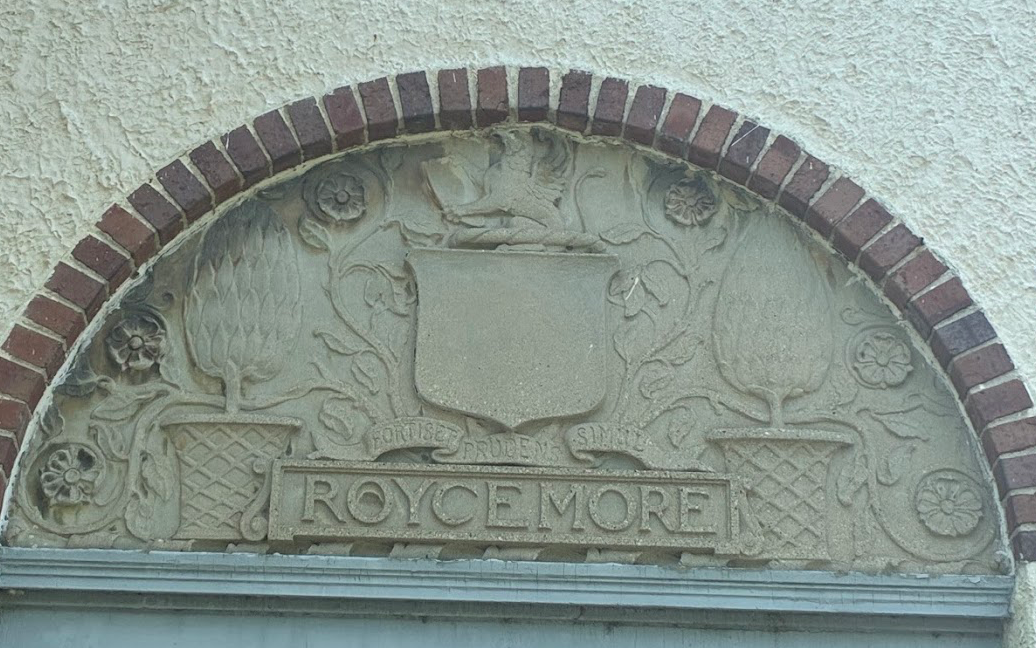
The land under 640 Lincoln was not owned by Roycemore. The school had a 99-year lease on the land from Northwestern and had a great deal: their annual lease was $10,500–$14,500/year against a fair market value of about $120,000/year, something the school claimed as an in-kind donation. In exchange, they gave a 25% discount to children of Northwestern faculty (later reduced to 15%).
In the 90s/00s, Northwestern gave notice that it would not renew when the lease expired in 2014 and offered $1,000,000 in incentives if Roycemore could vacate the property by December 2011.
The school took them up on the offer and by 2011, with enrollment of 257 students, the school began renovations on a new facility at 1200 Davis St., a former administrative building for the United Methodist Church's General Board of Pension Funds. The building opened in January 2012. This is their current location on Davis and Ridge.
Financing the Move & 2016 Collapse
To finance the move, the City of Evanston stepped in to help. They did something I didn’t know was possible; they issued bonds on behalf of Roycemore: $13,590,000 in City of Evanston Educational Facility Revenue Bonds, Series 2011. The bonds were issued through the city acting as a "conduit issuer," lending its tax-exempt bonding authority to the nonprofit school. The City did the same thing in 2019 for Chiaravalle Montessori School. They have a website on the subject and are not on the hook for anything financial.
The 2011 $13.5M bond made some pretty big promises, including expanding the school from ~250 to 341 students. In the bond, there is a $500k operating reserve fund set aside from the Northwestern donation. In order to unlock the fund, the school would have to hit some aggressive enrollment targets.
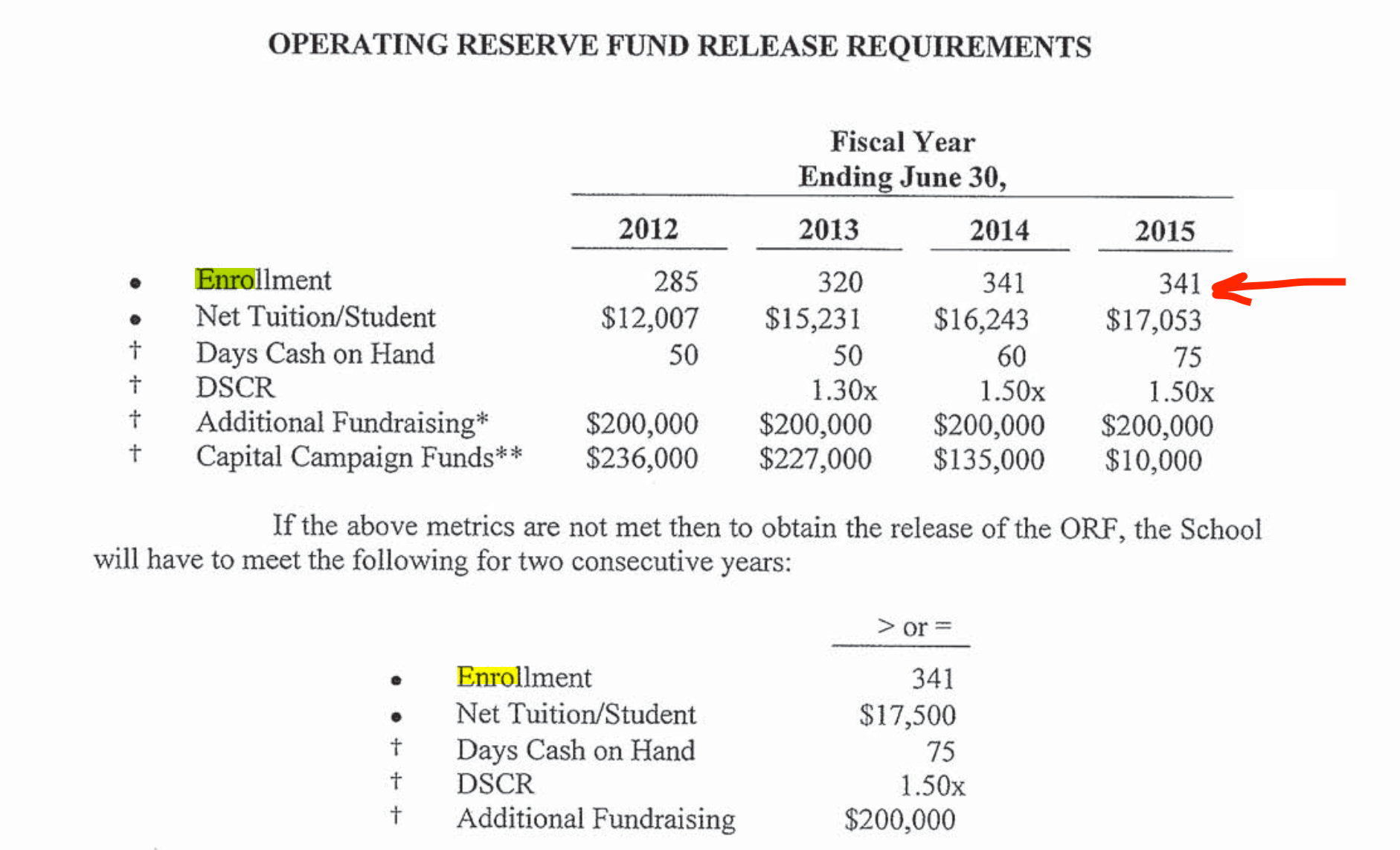
They had virtually no other funds, only a $10K endowment with the Evanston Community Foundation. That was it. This was a big bet.
Almost immediately after relocating, the School’s auditors identified material weaknesses in the 2012-2013 audit, indicating that they didn’t think a qualified person was preparing financial statements.
Limited controls over the preparation of the financial statements
Controls need to be implemented to prevent the occurrence of material misstatements in the presentation and disclosure of the financial statements, including the related footnotes. Someone with the necessary accounting expertise to prevent, detect, and correct a potential misstatement in the financial statements or notes needs to at least read, review, and approve of the financial statements for this to no longer be a material weakness.
Inadequate tracking of fixed assets
Fixed assets such as building improvements, furniture and equipment should be recorded to fixed asset accounts rather than expensed when purchased. Additionally, depreciation should be tracked and recorded for fixed assets.
On top of that, things started getting expensive: From 2012-2016 expenses went from about $3.9M → $6.77M.
FY | Expenses | Enrollment (fall from ISBE) | Result |
|---|---|---|---|
2011 (old building, most of yr) | $3.9M | ~250 | +$1.8M (capital gifts) |
2012 (first yr at 1200 Davis) | $4.85M | 259 | –$366K |
2013 | $5.73M | 291 | –$32K |
2014 | $6.14M | 316 | +$233K |
2015 | $6.77M | 269 | –$1.78M |
2016 | $6.77M | 234 | –$1.60M |
Maintaining this new expansion was expensive and by 2015-16, Roycemore was losing about $1.6 million per year. Partly driven from a general decrease in enrollment (lost 47 students between 2014-15), but also the underlying mix of students changed — there were less full-revenue kids: more faculty and Northwestern children, and scholarship/aided students. It’s not clear why enrollment dropped so quickly at this time, but in 2013, the long-term headmaster Joe Becker retired after 44 years at the school.
FY2014 (316 students) | FY2015 (269) | Change | |
|---|---|---|---|
Gross tuition & fees | $7,499,834 | $6,250,859 | –16.7% |
Gross tuition per student | ~$23,700 | ~$23,200 | –2% — flat |
School-year financial aid | $1,593,159 | $1,594,824 | +0.1% — frozen |
Faculty-children remission | $223,950 | $297,329 | +33% |
Northwestern discounts | $208,473 | $335,845 | +61% |
Distinguished scholarships | $68,490 | $113,750 | +66% |
Total aid & remission | $2,094,072 | $2,343,808 | +12% |
Effective discount rate | 27.9% | 37.5% | +9.6 pts |
This business model doesn’t work unless they had 300+ students paying close to full revenue. So by July 2016, they defaulted on their 2011 bond payments. A Material Events Notice dated July 1, 2016 discloses that the school deferred a scheduled mandatory principal redemption, failed to make required Revenue Fund deposits for the first half of 2016, failed to replenish draws on its Operating Reserve Fund, Debt Service Reserve Fund, and Repair and Replacement Fund, and was not meeting its required Debt Service Coverage Ratio.
To make the 2016 interest payment, they drained the Operating Reserve Fund entirely (recall: that was the $500k from Northwestern for moving out early) and entered forbearance with the bond holders, meaning they wouldn’t have to make principal payments on the bonds while a re-structuring occurred.
Things were quite bad — Roycemore's FY2016 audited financial statements, dated October 28, 2016, carried a “going-concern” opinion:
"The Company has suffered recurring losses from operations that raises substantial doubt about its ability to continue as a going concern... the School incurred a negative change in unrestricted net assets of $1,599,388 for the year ending June 30, 2016. At June 30, 2016, current liabilities exceeded current assets by $466,910."
Roycemore’s 2017 audit also contained a “going-concern” opinion:
As shown in the financial statements, the School incurred a negative change in unrestricted net assets of $923,082 for the year ending June 30, 2017. At June 30, 2017, current liabilities exceeded current assets by $1,220,169. Those factors, as well as the uncertain conditions that the School will face with potential noncompliance with the forbearance agreement (as discussed in Note 7), raise substantial doubt about the School’s ability to continue as a going concern for the one-year period from October 26, 2017, the date the financial statements are available to be issued, to October 26, 2018.
Note 7 above included a clause indicating that the school facilities were under foreclosure if they couldn’t resolve these issues in 2018.
If the provisions are not met above or a restructuring transaction is not completed, the School shall vacate the property promptly upon the end of the spring semester 2018, but in any event no later than June 15, 2018.
2018 Restructuring & Bailout
It’s not clear what happened to the 2011 bondholders, there was a settlement agreement but it’s behind an NDA. It does seem like someone took a haircut because in the 2016 IRS 990 (restated in 2018), Roycemore revealed they shaved off $3 million from the original debt.
"In order to address the negative fund balance represented in Part I, line 22, the school has made significant management and administrative changes to enhance the financial well-being of the organization in the years ahead. In February of 2018, the school restructure its debt by entering into a new loan agreement, bringing to an end a bond financing structure that was not favorable for the school. The change in financing structure along with capital fundraising resulted in an overall reduction of debt by approximately $3 million."
The 2021 bond offering documents (we’ll talk about that in a second) continues the story:
"In February 2018, an individual benefactor and parent of an alumna of the Borrower offered a taxable loan refinancing option to the Borrower in the principal amount of $10,000,000 as evidenced by the Taxable Note and secured by a mortgage, which resolved all agreements relating to the Prior Bonds. Between February 2018 and the present time, the Borrower paid down the Taxable Note to the current outstanding principal balance of $7,900,000."
Either way, they found a new financing structure. A private party loaned the school $10 million, secured by a mortgage on the 1200 Davis St. property. Roycemore used that money to settle with the original 2011 bondholders. The school now had a new mortgage with this person(s).
This gave them a couple years to fundraise, lower the costs of the financing, and right-size the model. In 2021, they secured a donation of $1 million and paid the $10 million debt down to $7.9 million. After that, they went back to the public markets, again through the City, and raised $8.275 million to pay off the bridge loan.
So by 2021, they’re back to where they started, but with $8.275 million in bonds instead of $13.59 million. They still had a small endowment, $29,307. But this was a fresh start — they had financially engineered their way through the crisis.
At this point in 2021, if you squint, you can sort of see a way they can survive long-term: keep enrollment above or near 300 revenue-generating students, manage costs like a hawk, fundraise aggressively, and pray you get another big donor to grow a real endowment.
2026 Redux: Let’s do this again but with COVID
Because it’s Evanston, let’s talk about District 65 for a second: as District 65’s enrollment dropped 20% during the COVID/Dr. Horton period, Roycemore benefited. Their enrollment grew about 20% between 2020 and 2024, peaking in 2022-23.
Year | Enrollment | Revenue | Expenses |
|---|---|---|---|
2016–17 | 242 | $6.7M | $7.7M |
2017–18 | 214 | $8.8M | $6.9M |
2018–19 | 215 | $6.0M | $6.5M |
2019–20 | 215 | $6.5M | $6.4M |
2020–21 | 230 | $8.0M | $6.3M |
2021–22 | 244 | $7.9M | $6.7M |
2022–23 | 268 | $9.8M (COVID $) | $8.0M |
2023–24 | 239 | $8.1M | $8.4M |
2024–25 | 205 | ~$6.0M | $7.5M |
2025–26 | 220 | not yet reported | not yet reported |
The big problem was that, just like District 65, expenses grew significantly, almost $2 million/year, during this period. By 2024-25, enrollment dropped and the school fell back to 2016 levels of operating loss (-$1.5 million/year).
Numbers for 2025-26 aren’t available, but given they were fundraising just to pay teacher salaries, it was likely similar. The business model wasn’t working again.
By May 12, 2026 they had 28 days of cash on hand.
On July 15, 2026, Roycemore announced they’re closed for next year and defaulted on the bonds, just as they did in 2016. This time, it seems to be the end of the road. Even if they could figure out another forbearance or bridge loan situation, they allegedly had less than 100 students fully committed for next year, an unsustainable number. They lost the confidence of the parents — even worse, the parents that gave deposits or pre-paid for next year are now likely to be creditors in the bankruptcy (or whatever happens next).
The 1200 Davis property is their primary collateral. Lind Capital Partners, an Evanston-based bondholder, already wrote down the value of the bonds ~16% in their April 2026 SEC filing (page 102, 271). Given that there is $7.5 million left on the 2021 bond, that values the property at around $6.5 million.
What did Northwestern do with the original property?
Given all this chaos, it’s fair to ask: what did Northwestern do with the original Roycemore property, the one they asked them to vacate after 99 years? The answer is: nothing. The property has been unused for nearly 15 years except for a short period where some art students used it temporarily. The property is overgrown and dilapidated, like the other nearby properties they are letting sit vacant.
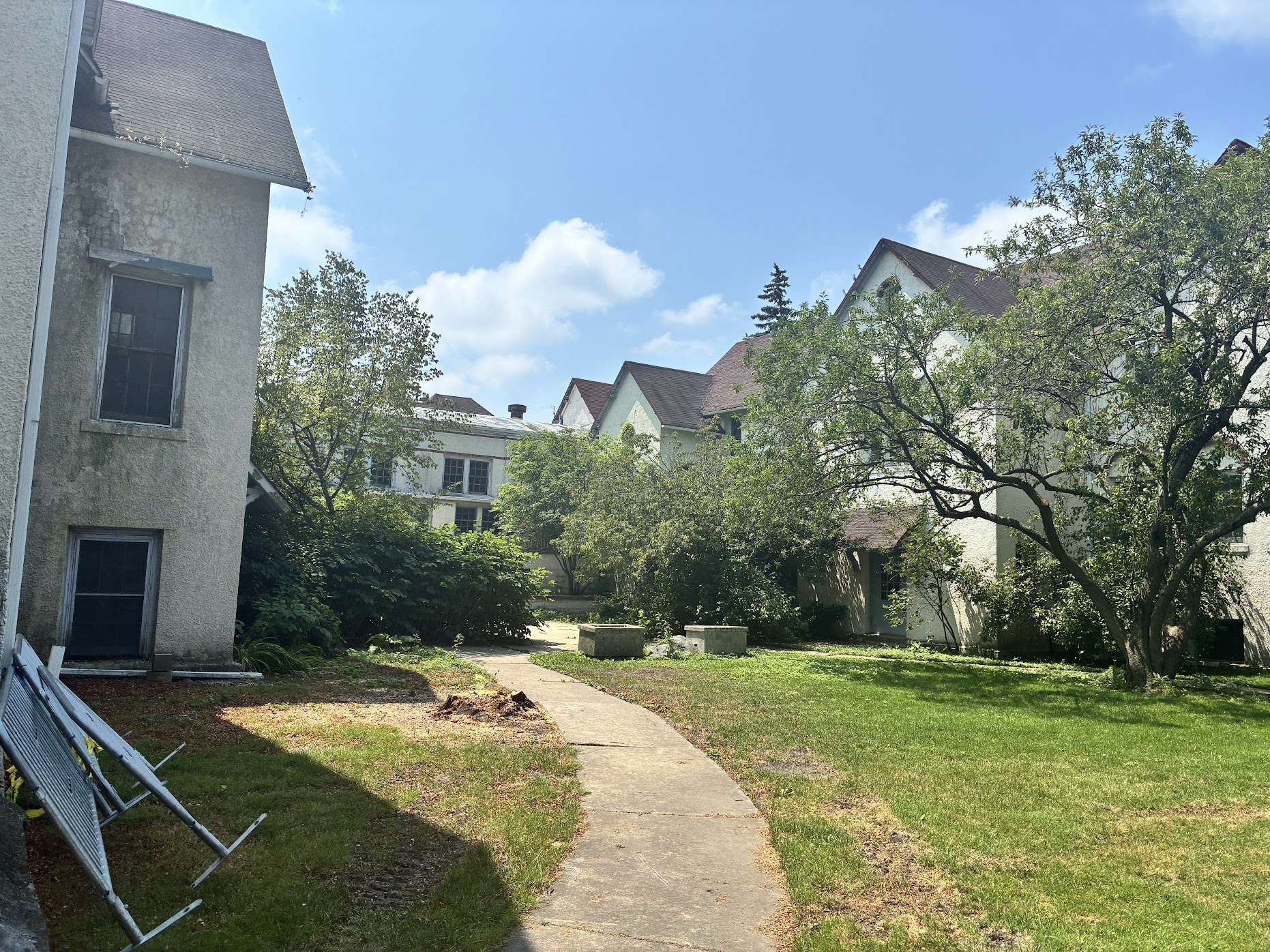
The outside of the building looks rough and if you have a chance to see inside, it’s also in bad shape. As far back as the 1990s, Northwestern seemed to have had plans for the property. According to the Daily Northwestern in 2011:
The pre-kindergarten through 12th grade private school’s search for a new school site began in the mid-’90s when NU put Roycemore on notice that their lease would not be renewed when it expired in 2014, said Eugene Sunshine, senior vice president for business and finance at NU.
“We wanted to give them the maximum amount of time they would need to move to a new location,” Sunshine said.
NU decided not to renew the lease because at the time, University leaders were thinking forward about the possible need to expand in the future, Sunshine said.
The 1990s and 2000s was a complicated time in Evanston-Northwestern history, especially for this address. In 1999, the City of Evanston created the Northeast Evanston Historic District, which includes 640 Lincoln. In 2000, Northwestern sued the city, claiming this classification was done in retaliation and the historic classification was overly burdensome. In the suit, the University claimed that even making safety improvements (such as emergency fire escape repairs) would require a 45-day sign off process with the Preservation Commission.
In 2004, the City and Northwestern settled with a consent decree, and this property remains a federally historic building in a locally historic zone. To be fair to Northwestern, this classification creates genuine red-tape to develop the property. On the other hand, they’ve spent billions of dollars on expansion since then: $250 million on the new Kellogg Global Hub (2017), $110 million on the basketball arena (2018), $270 million for the new Fieldhouse (2019), $850 million for the new Ryan Field (2024), and currently $300 million for the Allen Center (2026). I reached out to Northwestern for comment but haven’t heard back as of time of publication.
Same Thing Different Place
If this sounds like a theme, it is — schools and Districts around the US are wrangling with the expansion of operating costs picked up when there was free one-time federal money and no corresponding increase in long-term income, breaking budgets. The data nerds wrote about this subject in District 65 (who used it on headcount and pet projects) but’s a problem in a lot of places such as Chicago Public Schools, Naperville, Oak Park, and Waukegan.
But just like District 65, blaming macroeconomic factors obfuscates some questionable long-term decision making and governance practices that could’ve made this crisis more avoidable. For Roycemore, there’s so many, I’m just going to list a few here:
Little Savings / Endowment: During the entire 2011-present period, the school rarely had any form of investments. The closest they got was in 2023, when they allocated $750K of the $1.09M Employee Retention Credit (e.g. COVID relief) — $500K to the Innovation Center (see next bullet point), ~$250K to "endowment" — beginning the only endowment growth in school history, which they eventually used on the Innovation Center.
Side Projects: During 2022-23, when enrollment was at the COVID peak, Roycemore started a $3 million campaign to build an on-campus maker space. The school raised $1.5 million from donors, $500k from their “endowment” and hired Cordogan-Clark (of District 65 Foster School fame) and partially built out the space. They would need that money and fundraising capacity to save the school two years later.
Accounting Challenges. The accounting situation here seems to have been quite messy from the start. Auditors flagged real problems almost as soon as the school moved in: the FY2013 audit identified two formal material weaknesses — "limited controls over the preparation of the financial statements" and "inadequate tracking of fixed assets" — alongside a ~$256,668 prior-period adjustment because the school "did not properly capitalize or depreciate its fixed assets." Three years later, the FY2016 audit required its own prior-period restatement, this time for $851,544, due to "errors in the initial accounting of the bond issuance and related building improvements, as well as some errors in recognition of tuition revenue and classification of net assets.”
Leadership Flux. After the long time headmaster left after 44 years, there was a rotating cast of leadership tied to financial eras: Kevin Smith (2013-2016), Adrianne Finley Odell (2017-2022), Christopher English (2022-2026). The last guy, Paul Druzinsky only lasted two weeks.
But even with all this, there’s the fundamental issue that they left their old property (which was basically free) to a ~$1 million/year a mortgage payment, no endowment, a razor thin margin for error on the business model, in a highly competitive market, and leadership that the auditors, at least, didn’t think had much financial acumen. Given this risk, it’s kind of shocking to me that in 2011, there were investors willing to own these bonds (and again, in 2021). Hindsight is 20/20 but I think everyone involved (Roycemore, Northwestern, school families, the neighbors, donors, the bondholders, preservationists) would’ve been better if they had found a way to stay at 640 Lincoln.
Let me know in the comments what you think or if I missed anything, this is a complicated situation.