A Proposal: D65 Structural Math Improvement Plan (SMIP)
District 65 Board needs to finally address math performance crisis
I usually write about financial issues that our schools face, but today I want to write about an educational one: math. As almost any parent will testify, District 65 (and public education more broadly) has challenges with math education. I wrote about the national challenges a few months ago regarding news about increases in remedial math at state colleges.
District 65’s math test scores are concerning. As of the 2025 IAR reporting - 53% of District 65 students meet the proficiency level in math. The absolute number (half of the students failing!) is bad, but looks worse when compared to neighboring north-of-Chicago districts. We’re pretty close to the bottom.
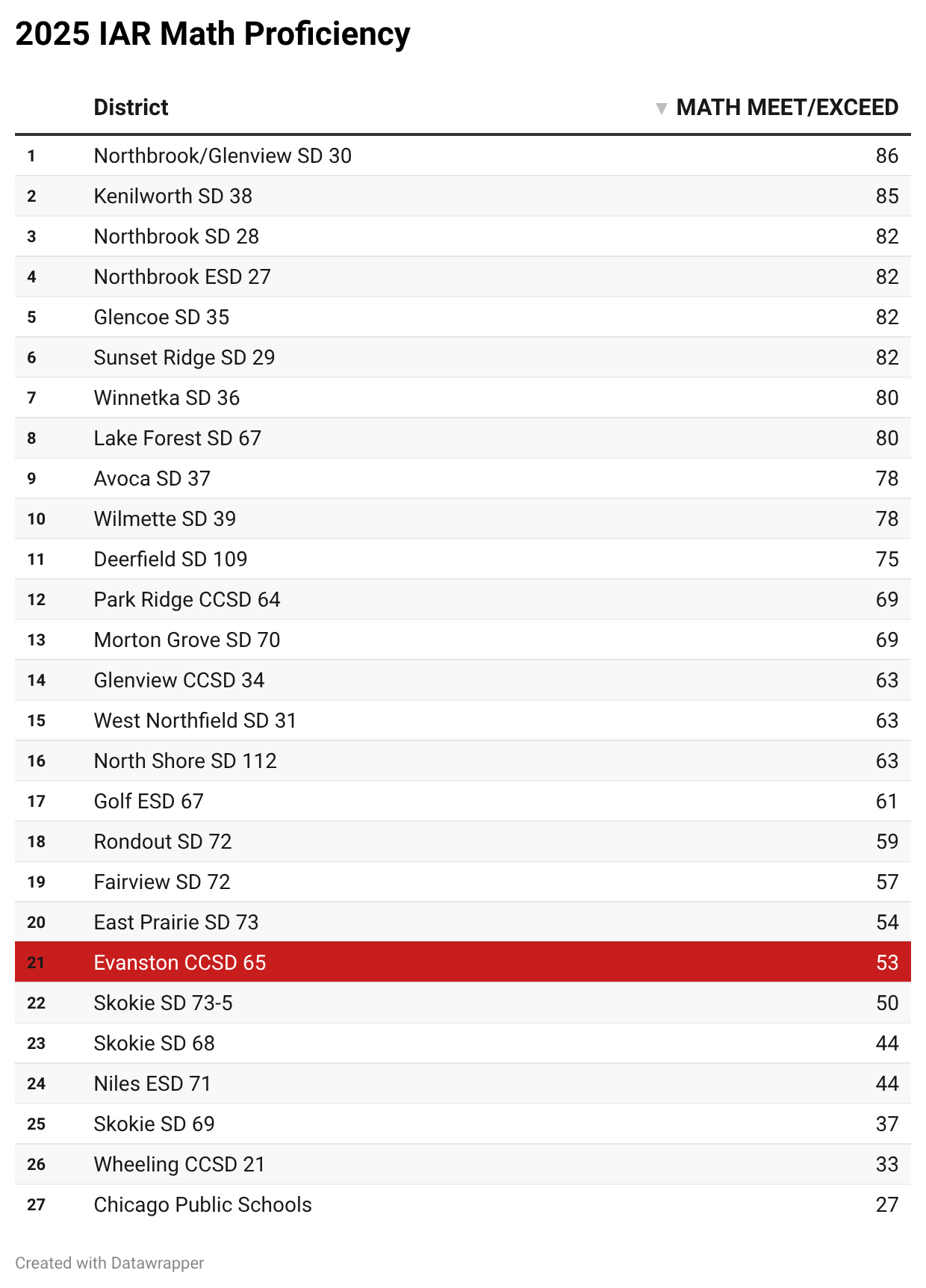
The District likes to brag that we’re ahead of the state average, but the state averages are grim; only 38% of Illinois public school students are proficient in math.
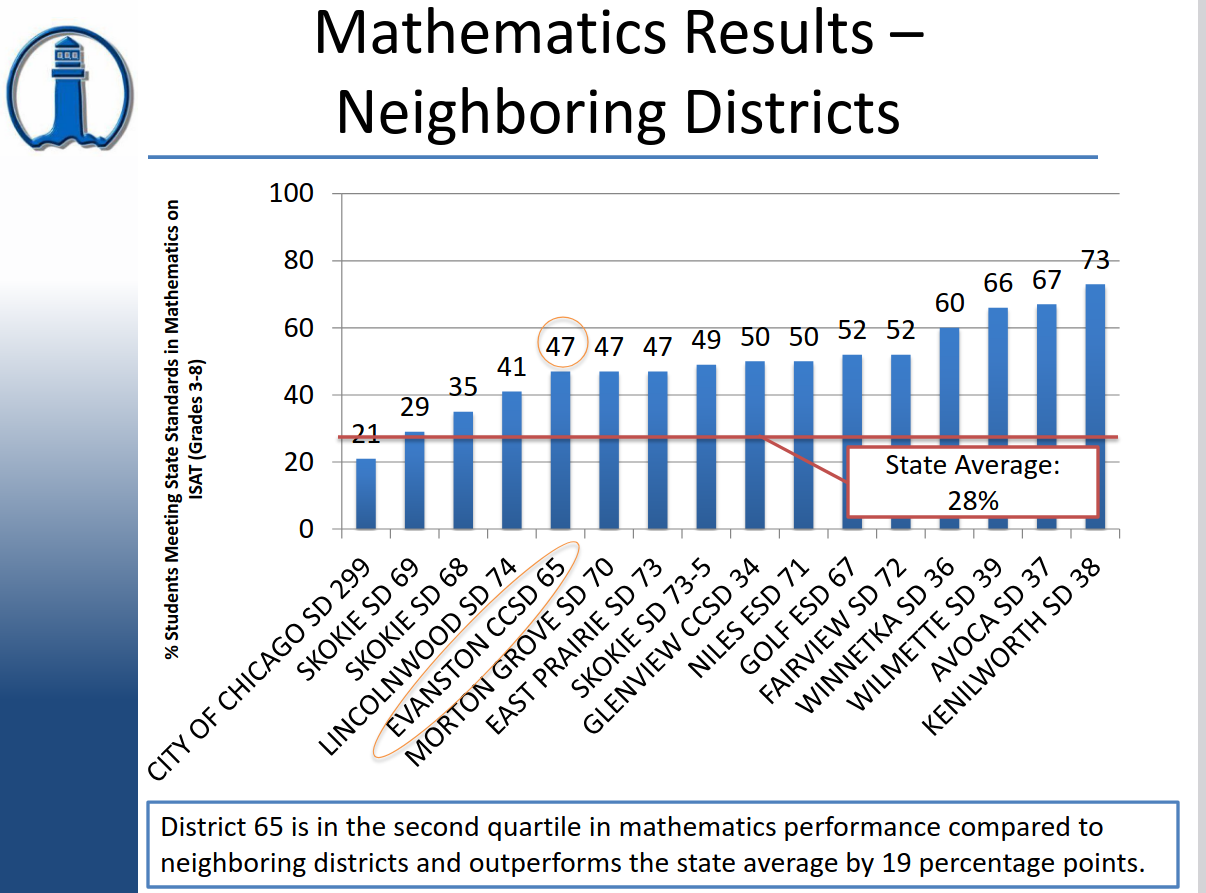
None of this is new, you can roll back the clock to 2014-15 before the current testing regime. Even back then, 47% of District 65 students scored proficient in math. The statewide average at that time was a dismal 28% proficiency.
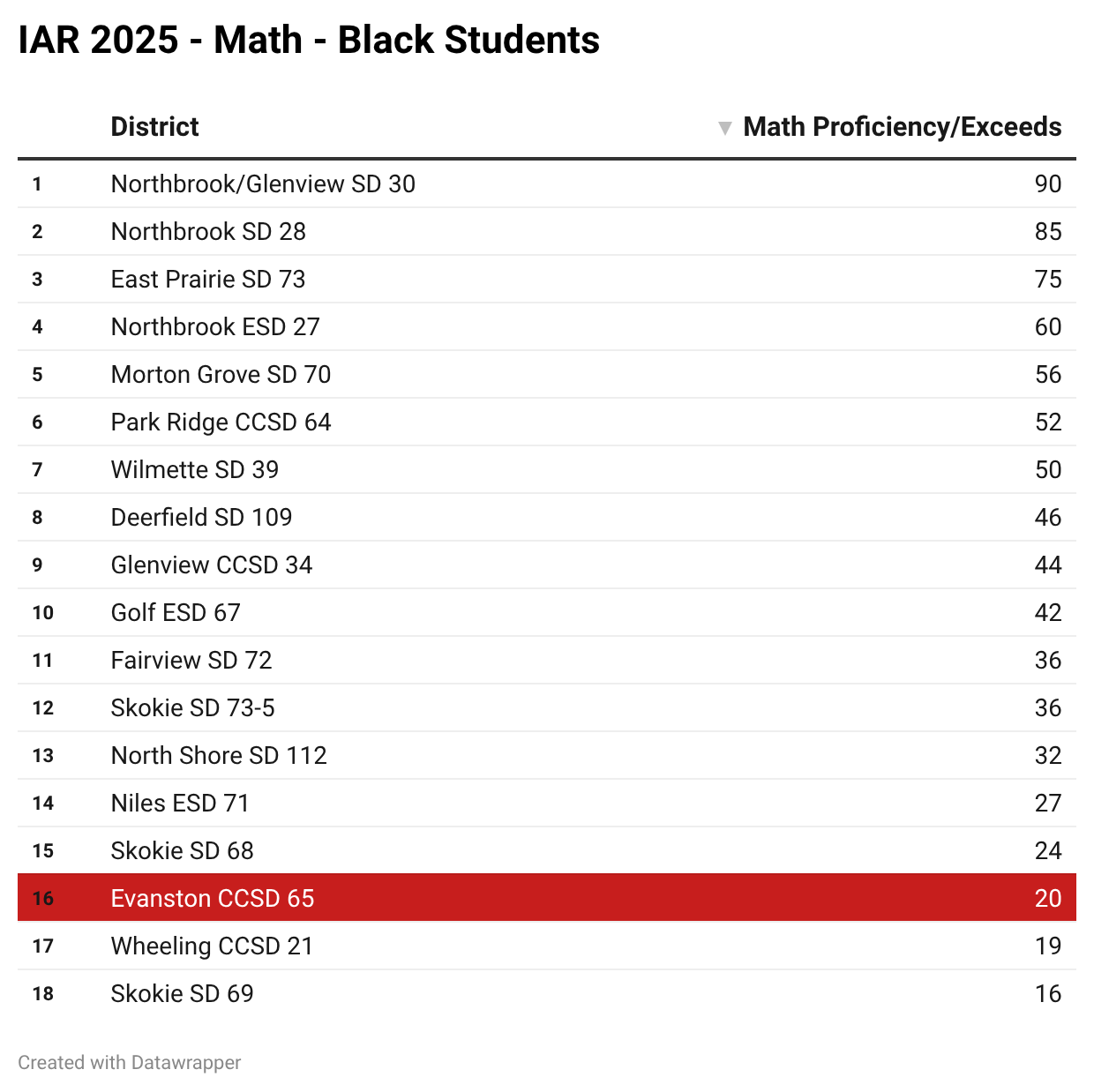
The racial achievement gap numbers for math remain staggering. In the 2025 IAR data, 74.7% of white D65 students and 20.1% of Black D65 students were proficient in math (data). An achievement gap of 54%! None of this is new either, even back in 2014-15, that gap was 51%. No progress has been made.
It doesn’t have to be this way - consider District 65’s absolute numbers against nearby Districts.
For all the millions Evanston has invested in equity training and consultants since 2015, there has been no return on that investment.
Remediation at ETHS
If you don’t want to consider the test scores, consider the situation at ETHS. Since 2023, enrollment in remedial math classes has ballooned. In their annual report for this year, ETHS noted:
The number of Pre-Algebra sections increased from 2 sections in SY2023 to 7 sections in SY2025 - a 207% increase in student enrollment.
Algebra 1 sections increased from 16 in SY2023 to 19 in SY2025, with a 17% increase in student enrollment
In March 2025, the ETHS administration noted a continued need to focus on foundational algebra and numeracy, citing that “Failing grades decreased, but significant numbers still struggle”. Needing remedial math in high school has real consequences: not only do the students lose a year or more, this imposes a real cost on the school’s resources.
Superintendent Performance
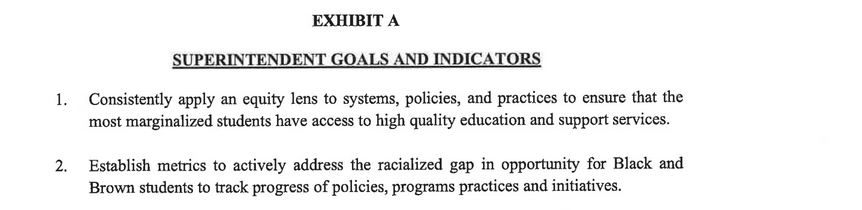
Like District 65’s financial situation, this has been a slow burn of our own making. Consider the non-specific performance goals in the Board-negotiated Superintendent contracts for Dr. Turner and Dr. Horton:
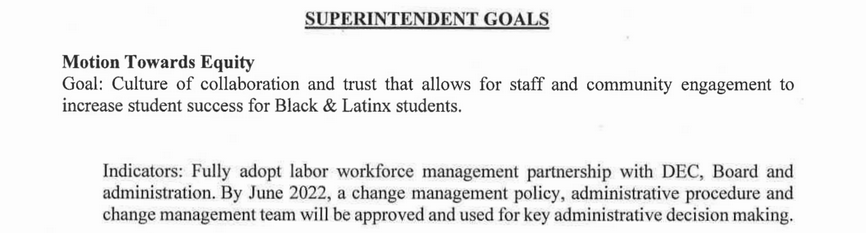
If you care about the achievement gap (as almost every board member in the last decade has claimed) then a top goal needs to be:
Increase Black and Hispanic math proficiency by >10% over X years
If the Superintendent can’t hit that goal, they should be fired. If they can, watch the district-wide average go up quickly. Instead the contracts contain language like:
Consistently apply an equity lens to systems, policies, and practices to ensure that the most marginalized students have access to high equality education and support services
How can you evaluate whether the equity lens is applied properly? What does that even mean? Larry Gavin at the Roundtable has written about this, arguing that the contract itself is of dubious legality with the state. Even if the contract itself is legal, the language of these performance goals betray the very equity causes the Board claims to support.
Structural Math Improvement Plan (SMIP)
I think it’s time for a come-to-Jesus moment on math performance. Parents and teachers can testify to the many problems:
Not Enough/No Remediation: There is virtually no remediation. If your kid falls behind in 2nd grade, they have three options: teach your kid math, wait until ETHS, or get private tutoring. If a kid is way behind, the classroom teacher can only do so much - there needs to be structured remediation.
Unclear Grading/Measurement: I’ve written about standards-based grading before, but parents need clear signals on whether their kid is passing or failing. This is important for parents to make decisions regarding remediation.
Math is a Secondary Priority: This came up during a meeting discussing the day-in-the-life slides of students at Foster School. There is a focus on social justice, inquiry, and identity but almost no mention of performance, especially math.
Useless Technology/Apps: Parents of younger students may know ST Math’s JiJi the Penguin. I don’t know what kind of “evidence-based” research supports these apps, but they’re not suitable replacements for direct math instruction.

There’s probably more I’m not even mentioning - including the curriculum - leave your thoughts in the comments.
None of this is intended to be critical of the educators - every math educator I’ve encountered in the District cares deeply about student performance. But they can only do so much, and when kids fall behind, the District needs to honor their motto, “Every Child, Every Day, Whatever It Takes”
Structural Math Improvement Plan
It’s time for an SDRP for math education - I’m calling it the Structural Math Improvement Plan. I think it needs to include the following:
Frequent Board Oversight: Like the SDRP, the Board needs to have this on the agenda every meeting to discuss a path forward. Like with the SDRP, the administrators need to present metrics, plans, structures, curriculum review, or ideas to improve student math performance along with actual plans for the Board to discuss and approve (more tutors? new curriculum?)
Measurable Performance Standards for the Superintendent: The Superintendent’s contract has to have real metrics in it, not just soft language about using an “equity lens.” If they fail to meet the metrics, the Board needs to hold them and their staff accountable.
Involve ETHS Math Educators: The Board needs to request ETHS math educators to talk in public and discuss what they’re seeing. Forget about filtering things through the District 65 administrators, go right to the folks seeing the issues first hand.
I don’t know what the ideal solution is - I’m not an expert on math pedagogy - but something needs to give. I leave you with a Carl Sagan quote I thought about while writing this story:
I have a foreboding of an America in my children's or grandchildren's time -- when the United States is a service and information economy; when nearly all the manufacturing industries have slipped away to other countries; when awesome technological powers are in the hands of a very few, and no one representing the public interest can even grasp the issues; when the people have lost the ability to set their own agendas or knowledgeably question those in authority; when, clutching our crystals and nervously consulting our horoscopes, our critical faculties in decline, unable to distinguish between what feels good and what's true, we slide, almost without noticing, back into superstition and darkness...